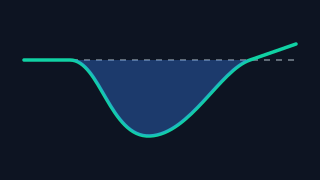
Anyone who invests in stocks will see their portfolio fall, sometimes sharply. It is not an exception: it is the price of higher long-term returns. Knowing what to expect is the best way not to be caught off guard.
How often falls happen
Looking at the history of major stock markets, a fall of at least 10% has happened on average about every one or two years, and one of at least 20% about every five or six years. Drawdowns are part of normal life.
After 2008, global markets took several years to get back to their previous highs. In 2020, by contrast, the recovery came within a few months. Nobody knows in advance how long a downturn will last.
Reading the charts in the Horizon app
In the Horizon app, on the Risk screen, you can find two tools to understand these movements. Rolling volatility shows how the intensity of swings changes over time. The Underwater Curve shows, day by day, how far the portfolio is below its peak, and how long it took to climb back.
The most costly mistake
Selling during a fall turns a temporary loss into a permanent one, and often means missing the strongest recovery days, which tend to come close to the worst moments.
What helps
-
Having an emergency fund, so you are never forced to sell.
-
Choosing an asset allocation you can truly live with.
-
Continuing your savings plan: during a fall you buy at lower prices.
-
Checking your portfolio less often: daily swings are noise.
-
Market falls are frequent and normal.
-
Selling in a panic makes losses permanent.
-
Preparation and discipline matter more than predictions.