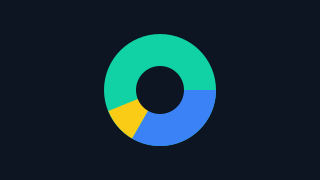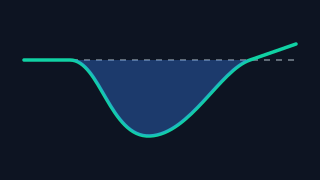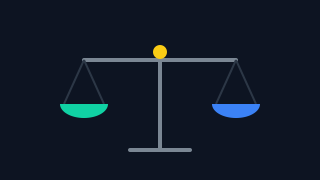
Even if you do nothing, your portfolio changes on its own: investments that rise weigh more and more, those that fall less and less. Rebalancing brings the weights back towards your target.
You start with 70% stocks and 30% bonds. After a year in which stocks rise 25% and bonds stay flat, you end up with about 74% and 26%: more risk than you chose.
Why do it
Rebalancing is not about increasing returns, but about keeping the level of risk you decided on. It also has a useful side effect: it leads you to sell, or buy less of, what has risen, and to buy what has fallen.
When to do it
- By calendar: once a year, for example always in the same month. Simple and easy to remember.
- By threshold: when an asset class’s deviation goes beyond a set limit, for example 5 percentage points.
Rebalancing too often does not help: it only increases costs and taxes.
New money: the most efficient way
Selling has two costs: fees and, if you are in profit, taxes on the gain. That is why, if you invest regularly, the best approach is to use new money: instead of splitting it according to your targets, you direct it to what has fallen behind.
Your portfolio is at 74/26 instead of 70/30. Instead of selling shares, for a few months you use your whole contribution to buy the ETF that has fallen behind, until the weights are back near target.
This is exactly the calculation Horizon’s Rebalance tool does: it shows how much of each asset to buy with the capital you want to invest, and how much deviation would remain.
- Rebalancing keeps the risk you chose.
- Once a year or beyond a threshold is enough.
- Using new money avoids selling fees and taxes.