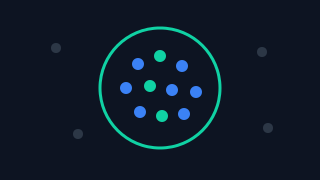
An ETF is an investment fund that is bought and sold on the stock exchange, just like a share. It holds many securities at once: a single share gives you a small piece of all of them.
A basket that tracks an index
Almost all ETFs track an index, a list of securities selected by precise rules. An ETF does not try to beat the market: it simply follows it. That is why its costs are much lower than those of a traditional fund, where a manager decides what to buy and sell.
An MSCI World ETF holds about 1,400 companies across 23 countries. Buying them one by one would be impossible for almost anyone; with an ETF it takes a single transaction.
Why they are so popular
- Instant diversification: hundreds or thousands of securities in one instrument.
- Low costs: the TER of many ETFs is between 0.05% and 0.30% a year, compared with 1.5-2% for many active funds.
- Transparency: holdings are public and regularly updated.
- Simplicity: they can be bought and sold on the exchange throughout the day.
Are they safe?
An ETF does not protect you from market swings: if the index falls, the ETF falls too. There is, however, a different kind of protection. European ETFs are regulated funds (UCITS) and their assets are kept separate from those of the company that manages them: if the issuer ran into trouble, the fund’s securities would still belong to investors.
Be careful not to confuse ETFs with similar products such as ETCs and ETNs, often used for gold or cryptocurrencies: they are bought the same way, but they are not funds and follow different rules.
How to read an ETF’s name
iShares Core MSCI World UCITS ETF USD (Acc): iShares is the issuer, MSCI World the index tracked, UCITS means it is a regulated European fund, USD is the fund currency and Acc means it is accumulating.
So the name tells you almost everything you need to understand an ETF. The rest, such as the ISIN code, the type of replication and the fund size, is on each ETF’s page, which you can open from the Catalogue.