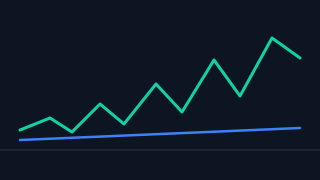
Diversification is the only investing rule that reduces risk without reducing expected return on average. The idea is simple: if you spread money across many different investments, a single problem has little impact on the whole.
Levels of diversification
- Across companies: hundreds of securities instead of a few.
- Across countries: not depending on a single nation’s economy.
- Across sectors: technology, healthcare, energy, finance and so on.
- Across asset classes: stocks, bonds and others, which react differently.
Anyone who put everything into a few tech companies in 2000 saw losses above 70%, and some of those companies never recovered. A global ETF, by contrast, recovered within a few years.
The traps
Owning many ETFs does not mean being diversified. Two ETFs can hold largely the same companies: this is overlap. To get an idea, look at the top holdings on each ETF’s page, from the Catalogue.
An MSCI World ETF and an S&P 500 ETF share most of the large US companies: holding both increases your US weight instead of reducing it.
Then there is the hidden concentration inside indices themselves. In recent years the US has made up about 70% of the MSCI World, and the top ten companies about a quarter of the index. It is not a flaw, but it is worth knowing.
What diversification does not do
Diversification reduces the risk tied to a single company, country or sector, but it does not remove the risk of the market as a whole: in a broad crisis almost everything falls together. That is why the correlation between investments and the choice of asset classes also matter.
- Diversifying reduces risk without reducing expected return.
- More ETFs does not mean more diversification: check the overlap.
- Even a global index has its concentrations.